

CHIROMASSAGE (decontracting relaxing)
Chiromassage: sports massage
From an etymological point of view, the term "chiromassage" comes from the combination of the Greek word "chiros," meaning "hands," with the verb "to knead or gently press." Thus, it literally means "massage with the hands" or "manual massage," and is used to differentiate it from massages that employ electrical devices or mechanical instruments. Massage techniques are established and applied according to the specific objective to be achieved.
"Chiromassage" is a method of exploration (through perceptive palpation) and manual treatment, applied to the body's surface and transmitted by the mechanical pressure of the hands to the different organs and tissues of the human body. It has regulatory effects on pain, overall energy levels, mood, fatigue, and the psyche in general. Depending on the indication and the proposed treatment objectives, effects can be achieved that generate direct and/or reflex actions on the body.
The benefits of massage have evolved to the present day, from the simplest techniques to provide relaxation and promote sleep, to the specific development of more complex ones to relieve or eliminate specific ailments of the body and/or organism.
The main effects are:
- Mechanical: referring to how the mechanical forces related to each maneuver affect the tissues.
Physiological-hygienic: when the massage is performed on a healthy person to provide greater vigor to the body or to relieve tiredness and, it is associated with the practice of physical exercise or gentle gymnastics, and/or sauna, steam bath or Turkish bath, etc.
- Preventive: These are fulfilled when a tense area or potential injury is located and delimited by palpation. This is communicated to the person receiving the massage, and if feasible, treatment is provided. Furthermore, advising that the treatment be combined with moderate exercise promotes well-being and ensures the massage's long-lasting effects. This fulfills several of the manual therapist's functions: caring for, preventing, treating, and promoting health.
- Therapeutic: This occurs when massage is used to improve circulatory function, restore restricted mobility between damaged tissues, relieve and/or reduce pain, or optimize sensory awareness. When massage provides human support, relaxation, and well-being, aiding in the recovery and maintenance of health, it becomes, even unintentionally, a therapeutic act.
- Aesthetic-hygienic: Mobilizing the skin produces a mechanical effect of exfoliation or cleansing, thus removing dead skin cells. When QM aims to improve a person's external appearance by eliminating fat deposits, restoring muscle tone, and relieving fatigue, it has hygienic benefits since eliminating fatigue in a healthy person produces an aesthetic result.
- Sports: when performed to prepare an athlete for competition before, during, and after training.
- Psychological-emotional: the touch of an experienced hand provides calm, security, and comfort to the person being treated, promoting relaxation while regulating and relieving psychophysical tension.
- Regulates function: massage helps improve the body's self-healing capacity.
Myofascial Induction
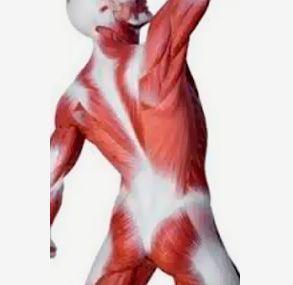
Myofascial induction
Myofascial induction refers to a type of bodywork that involves connecting with the body's connective tissues. Connective tissues are all the tissues that connect and separate the different structures of the body; they include tendons, ligaments, periosteum, and the various layers that cover and connect organs, blood vessels, nerves, muscles, and bones.
It comes from the practice of structural, visceral, and craniosacral osteopathy.
Fascial treatment is like an instrument capable of restoring the natural movement of tissues and consequently relieving pains that arise in different parts of the body.
But myofascial induction (also called "fasciatherapy" in some countries like France and Portugal) goes much further, as it is a tool for connection, a means of support through touch. In the silent dialogue of touch, the patient reconnects with their body. The suffering, distant, and unperceived body becomes a sensitive, moving, emotional, and deeply moved body once more.
Physical pain is often entrusted to the manual therapist, while emotional pain is entrusted to the psychologist. We, as manual therapists, have the ability to hear the body's pleas, which are generally not heard by the psychologist because they are expressed through the dialogue of organic tissues, not through verbal language. This suffering must be heard and acknowledged.
What diseases does Myofascial Induction target?
Fasciatherapy is aimed at various types of pain, such as locomotor, cranial, visceral, accompanied or not by functional disturbances such as digestive, respiratory and gynecological.
It also helps to relieve psychosomatic pains and somatizations that accompany psychological disturbances and states of stress.
The pains of children, the elderly, and the pains that accompany cancers or other serious illnesses are also susceptible to falling within the scope of myofascial induction.
SHIATSU
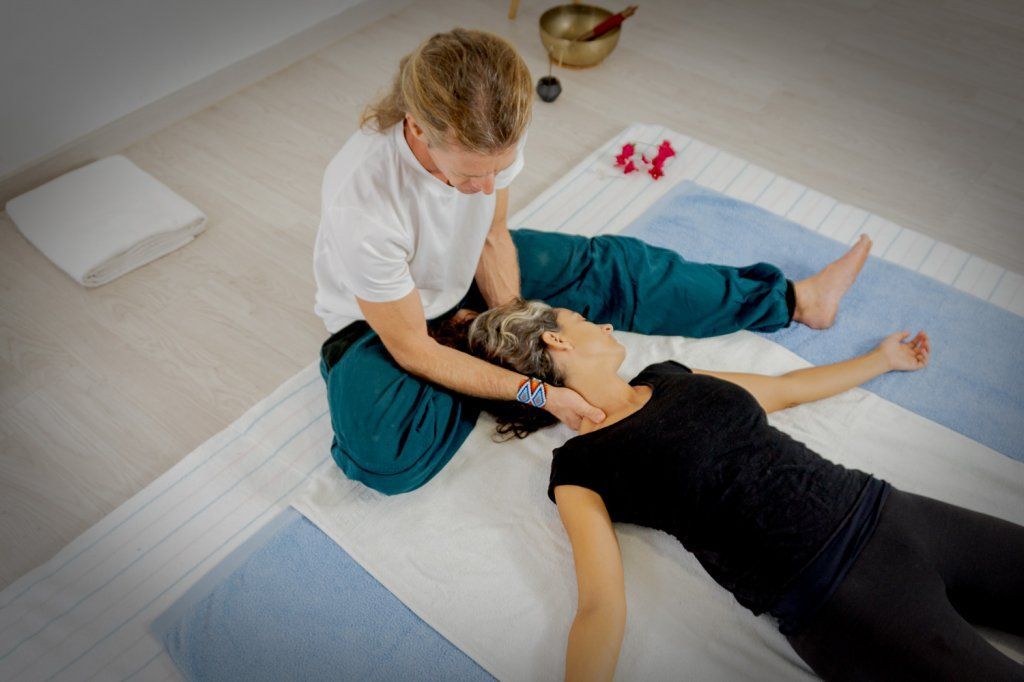
Shiatsu
Shiatsu is an officially recognized therapy within the Japanese healthcare system and defined by its Ministry of Health (Health, Labour and Welfare) as follows:
Shiatsu is a treatment that uses finger pressure on specific points of the body to maintain and improve health, alleviate various ailments, correct bodily imbalances, and reactivate the body's self-healing abilities. It has no side effects and can be referred to simply as shiatsu or shiatsu treatment.
The International Shiatsu Association's application and learning of shiatsu is based on the definition of the Japanese Ministry of Health.
The word shiatsu is formed from two ideograms: 圧, the first meaning finger, and 圧, meaning pressure. Therefore, its literal translation is finger pressure.
FOOT REFLEXOLOGY
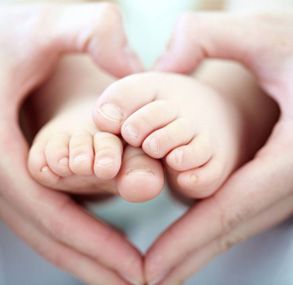
Foot reflexology
It is a diagnostic and treatment technique in which certain areas of the body are stimulated to obtain healthy responses from the different organs of the body.
Through reflexology, we can elicit a healthy response from the organs, systems, and apparatuses by applying appropriate stimulation to the corresponding reflex zones. This stimulation helps establish the natural balance of energy and the harmonious functioning of the entire organism.
Energy flows along specific pathways. It's possible that these channels may be blocked, causing sensitivity in these areas. This indicates that the discomfort or condition may originate elsewhere in the body. Massaging specific reflex points helps unblock these channels, restoring energy flow, soothing pain, and restoring full function.
Reflexology is used in many cases and is especially effective in calming pains (back, head and toothaches), in treating digestive disorders, stress, tension, colds, flu, asthma, arthritis and many others; it is also possible to detect potential diseases and even apply preventive treatment.